

What to Buy When Grocery Shopping Using the 5-4-3-2-1 Grocery Budgeting Method
Last updated: 1 March 2026
Weekly grocery shopping can feel chaotic, overwhelming, and expensive. If you've ever stood in the produce aisle asking yourself what to buy when grocery shopping and walked out with items that never quite turn into meals, you're not alone. The 5-4-3-2-1 grocery method, also called the 5-to-1 method, has gained popularity because it brings structure to that exact moment of indecision.
Rather than relying on willpower, discounts, or rigid meal plans, this method gives you a simple framework to follow before you even enter the shop. The goal is not perfection, but consistency, balance, and fewer wasted purchases.
What is the 5-4-3-2-1 grocery method?
The 5-4-3-2-1 method answers the question "what should I buy?" ahead of time by limiting how many items you choose from key food groups each week.
You commit to buying five vegetables, four fruits, three protein sources, two carbohydrate staples, and one optional or "fun" item. Each number represents distinct items, not portions. A bag of carrots counts as one vegetable, just like a head of broccoli does.
This keeps grocery decisions manageable whilst still leaving room for flexibility, preferences, and different cuisines.
Curious to try it this week? MenuMagic has a dedicated option in Plan Rules for both the 5-4-3-2-1 and 333 methods, so applying this framework while planning meals and grocery shopping feels effortless.
Put this method to work
Generate a week of recipes from what's already in your fridge, or grab the printable grocery list.
Why this method works
Nutrition research consistently shows that diets centred on vegetables, fruits, whole grains, and minimally processed proteins are associated with better health outcomes and lower long-term costs. At the same time, behavioural research shows that reducing the number of decisions people make lowers impulse buying.
The 5-4-3-2-1 method quietly combines both ideas. By prioritising categories first, you naturally fill your trolley with nutrient-dense foods. By allowing only one flexible item, you reduce the tendency to keep adding "just one more" snack.
Most importantly, it shifts decisions out of the supermarket, where fatigue and hunger tend to take over. This also helps you resist store layout tactics designed to increase impulse purchases. The method keeps you focused on specific categories rather than wandering every aisle.
The psychology behind the "fun item"
The single treat allowance is not an afterthought. Behavioural economists call this "planned indulgence," and it serves a critical purpose: it prevents the feeling of deprivation that often leads to binge shopping on future trips. By building in one intentional treat, you satisfy the reward-seeking part of your brain without derailing the entire trolley. Many people find that knowing they have permission for one fun item actually reduces their overall desire to add extras.
A concrete example with numbers
Imagine you are shopping for one adult with a weekly grocery budget of around £50.
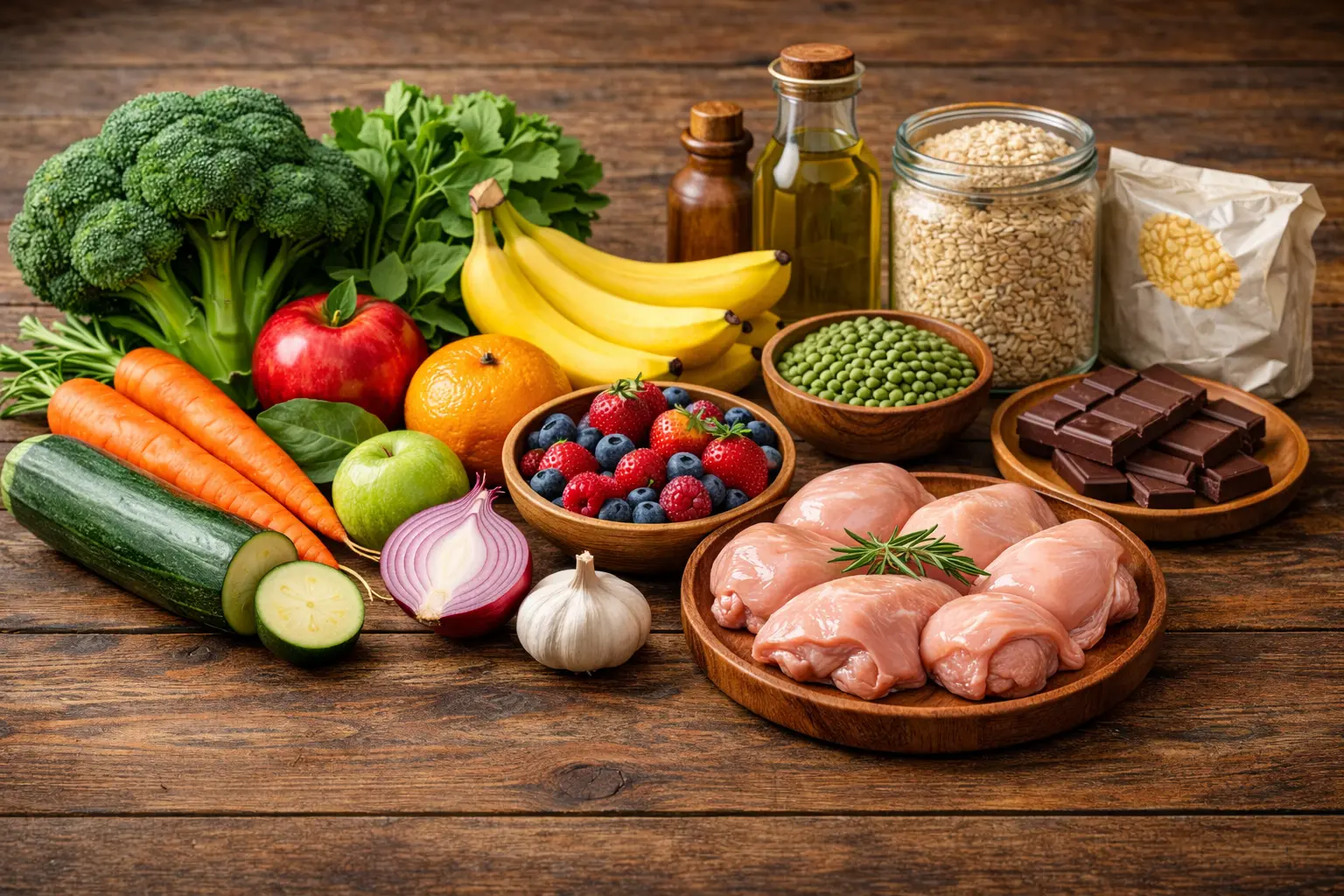
You might start by choosing five vegetables that can be used across multiple meals, such as broccoli, carrots, onions, courgettes, and spinach. These could cost roughly £15 and form the base of lunches and dinners.
Next, you select four fruits, for example apples, bananas, oranges, and frozen berries. This mix balances freshness and shelf life and comes to about £8.
For proteins, you pick three sources like eggs, chicken thighs, and lentils. Together they might cost around £15 and provide variety across breakfasts and main meals.
Two carbohydrate staples, such as brown rice and oats, add another £8 and round out the meals.
Finally, you choose one fun item, perhaps dark chocolate or ice cream, budgeting about £4. You leave the shop having answered what to buy when grocery shopping, without scanning every aisle or second-guessing yourself.
Scaling for families
For households with more than one person, multiply the base numbers proportionally. A family of four might aim for 10 vegetables, 8 fruits, 6 proteins, 4 carbs, and 2 fun items. Alternatively, some families prefer to keep the item count the same but increase quantities. Two bags of carrots instead of one still counts as one vegetable choice.
The key is maintaining the ratio: produce heavy, proteins moderate, carbs supporting, treats limited. Adjust based on appetites and ages; households with teenagers may need extra proteins and carbs.
Seasonal flexibility
The method works best when you adapt it to what is actually available and affordable. In winter, swap summer squash for root vegetables like sweet potatoes or parsnips. When berries are expensive, choose seasonal citrus or frozen options instead.
Farmers markets and weekly supermarket leaflets can guide your five vegetable and four fruit picks toward what is fresh and reasonably priced that week. The structure stays the same; only the specific items rotate.
What about cupboard staples?
The 5-4-3-2-1 method covers your weekly perishables, not your entire kitchen. Cupboard staples like cooking oil, salt, spices, condiments, and tinned goods fall outside the weekly count. Consider doing a separate cupboard restock once a month or adding these items as needed without counting them against your 15 weekly picks.
This keeps the method focused on meal-building decisions rather than background supplies.
When to break the rules: sales and bulk buying
If chicken thighs are half price this week, buy extra and freeze them. If your favourite seasonal fruit is about to disappear, stock up. The 5-4-3-2-1 method is a decision framework, not a hard limit.
The rule of thumb: strategic stockpiling on steep discounts is smart, but only for items you will actually use. Buying three bags of spinach because they are on offer makes sense only if you can realistically eat or freeze them before they spoil.
Who this approach works best for
The 5-4-3-2-1 method is especially useful if you want guidance without strict rules. Busy professionals appreciate the speed of decision-making. Families like that it controls spending without eliminating treats. Students and anyone on a fixed budget benefit from the predictability.
It also works well if you already plan meals loosely or use a shared shopping list, since the structure slots neatly into those routines.
Variations and limitations
The biggest strength of the 5-4-3-2-1 approach is that it gives you structure without requiring strict meal-by-meal rules. The method is easy to remember, adaptable to different cuisines, and scalable across household sizes.
One popular variation is chef Will Coleman's 6-to-1 framework, first proposed as six vegetables, five fruits, four starches, three proteins, two sauces, and one "extra" item. As covered in TODAY , the core idea is the same: reduce decision fatigue by setting category boundaries before you shop.
That said, both frameworks have the same practical limitations. If you do not know what meals you plan to cook, you also do not know how long your groceries will last. Buying six vegetables sounds clear until you ask a practical question like: do you need two courgettes or five?
Quantity planning is the second friction point. Item counts tell you what categories to buy, but not how much of each ingredient you need for your real week. Without a meal plan, many people either overbuy and waste food or underbuy and make a second trip.
There is also an effort mismatch for people who already find grocery shopping a hassle. The method can make in-shop decisions faster, but it does not remove the chore of deciding recipes, estimating quantities, and coordinating ingredients across multiple meals.
This is exactly where tools like MenuMagic add a missing layer. You still get the clean structure of category-based shopping, but with meal-level quantity guidance and ingredient reuse built in.
Common mistakes and how to avoid them
A frequent mistake is choosing vegetables that do not work well together, which leads to unused produce. The fix is to prioritise versatile ingredients like onions, carrots, and leafy greens that appear in many dishes.
Another issue is overspending on proteins. If meat prices are high, swapping one protein for eggs or pulses keeps the structure intact whilst lowering costs.
The fun item can also quietly multiply. Deciding in advance what that one item will be helps prevent it from turning into several impulse purchases.
Finally, forgetting what you already have at home undermines any system. A quick cupboard check or a synced digital shopping list helps avoid duplicates.
A simple way to start this week
Before your next grocery trip, take one minute to lock in your five vegetables, four fruits, three proteins, two carbs, and one extra. If you already use digital meal planning tools, MenuMagic can turn those choices into a structured shopping list and help reuse ingredients across meals so nothing goes to waste.
That small moment of planning often changes the entire shopping experience.
Take 5-4-3-2-1 further with MenuMagic
The 5-4-3-2-1 method gives you structure. MenuMagic gives you speed.
Instead of manually tracking your five vegetables and four fruits, MenuMagic builds your weekly shopping list automatically, organised by shop aisle. It suggests recipes that reuse your chosen ingredients across meals, so that bag of spinach actually gets eaten.
If you liked the simplicity of 5-4-3-2-1, you'll love having a tool that does the maths for you. Try MenuMagic free →
What are other smart ways to save money when grocery shopping?
If you already use 5-4-3-2-1, you can lower your total spend even more with a few straightforward systems:
-
Start with a meal plan, even a loose one. Decide 4-6 dinners before shopping and buy only what supports those meals. This works because it cuts impulse buys and reduces food waste, which is one of the biggest hidden grocery costs. A simple tactic: choose meals that reuse ingredients, like spinach in omelettes, salads, and pasta.
-
Use unit price, not shelf price. Shelf price tells you what you pay now; unit price tells you what you pay per 100g, kilo, or litre. Example: if a 500g pasta is £1.10 (£0.22 per 100g) and a 1kg pasta is £2.00 (£0.20 per 100g), the larger pack is the better value.
-
Buy produce in season. Seasonal fruit and vegetables are often 30-60% cheaper. In practice, summer tomatoes, courgettes, peaches, and sweetcorn usually drop in price, while winter berries or out-of-season asparagus often spike.
-
Prefer own-label brands for staples. Own label products are often 20-40% cheaper and frequently come from the same manufacturers. This is especially reliable for pasta, rice, tinned beans, yoghurt, and frozen vegetables.
-
Buy some things frozen on purpose. Frozen spinach, broccoli, berries, and peas are often cheaper and reduce spoilage. They are usually frozen shortly after harvest, so nutrition is often comparable to fresh.
-
Do not shop hungry. It sounds obvious, but it matters: hunger increases impulse purchases, especially snacks, processed foods, and extras you did not plan to buy.
-
Keep a base cupboard. Budget-friendly staples like rice, pasta, dried beans, tinned tomatoes, onions, and potatoes make meals stretch further and reduce emergency takeaway nights.
-
Check the reduced section. Many supermarkets discount near-expiry items, slightly damaged produce, or discontinued products by 30-50%. This is where planning helps: buy discounted food only if you know exactly when you will use it.
-
Track prices for your core 20-30 items. Most households rotate through the same staples. Knowing which local shop is cheapest for each category usually saves more than random coupon clipping.
-
Avoid single-portion convenience foods. Pre-cut fruit, snack packs, and single-serve items are often 3-6x more expensive than whole versions. If time is the issue, batch prep at home once and keep the margin.
Used together, these habits turn grocery savings from one-off wins into a repeatable weekly system.
FAQ: what should I buy when grocery shopping?
If your goal is to eat well without overspending, start with vegetables and fruits, anchor meals around a few reliable protein sources, add simple carbohydrates like rice or oats, and allow yourself one intentional treat. The 5-4-3-2-1 method exists to make that decision automatic rather than stressful.
FAQ: how do I scale 5-4-3-2-1 for a family?
Multiply the base numbers proportionally. A family of four might aim for 10 vegetables, 8 fruits, 6 proteins, 4 carbs, and 2 fun items. Alternatively, keep the item count the same but increase quantities. Two bags of carrots instead of one still counts as one vegetable choice.
FAQ: what about pantry staples like oil and spices?
The 5-4-3-2-1 method covers weekly perishables, not your entire kitchen. Pantry staples fall outside the weekly count. Consider a separate monthly restock for those items.
How it compares to the 333 method
If the 5-4-3-2-1 method still feels like too many decisions, the 333 grocery shopping method offers an even more minimalist alternative. With the 333 approach, you choose just three vegetables, three proteins, and three carbs for the week. That's nine items total, with no fruit category or fun item built in.
The 333 method trades variety for simplicity. It works especially well for solo shoppers, busy weeks, or anyone who wants the fewest possible choices. The 5-4-3-2-1 method, by contrast, encourages a more balanced spread of produce and includes room for a treat, which many households find more sustainable long-term.
Neither approach is universally better. Some people alternate between the two depending on the week. If you find 5-4-3-2-1 overwhelming at first, starting with 333 can be a useful stepping stone.
5-4-3-2-1 and 333 are not the only counting rules in circulation. Our comparison of the 3-2-1, 3-3-3, 5-4-3-2-1 and 6-to-1 grocery rules puts all four side by side, from the six-item 3-2-1 list up to the bulk-friendly 6-to-1 rule, and matches each one to a household size and budget.
Final thoughts
Most grocery stress comes from deciding in the aisle. The 5-4-3-2-1 grocery budgeting method moves that decision earlier and gives you a calm, repeatable answer to what to buy when grocery shopping.
It is not about perfect nutrition or strict rules. It is about leaving the shop with food that turns into meals, fits your budget, and feels easy to manage week after week.
Put this method to work
Generate a week of recipes from what's already in your fridge, or grab the printable grocery list.
More posts
 MenuMagic
Recipes
Vegan recipes
Vegetarian recipes
Keto recipes
Protein recipes
Lactose-free recipes
Gluten-free recipes
Low glycaemic index recipes
Resources
Blog
Recipe Generator
Leftovers Recipe Generator
Printable Shopping List
Kitchen Measurement Converter
Calorie Calculator
Seasonal Fruits and Vegetables
Our other apps
WindNow
Our other apps
WindNow


© 2026 MenuMagic.
All rights reserved.